
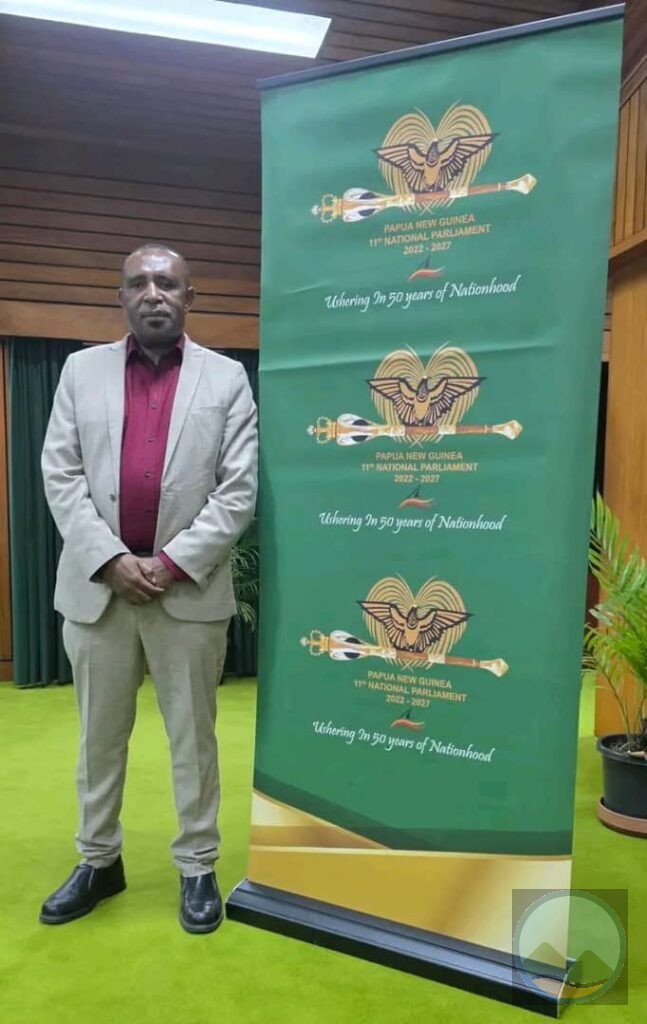
Destiny Party Leader and Wau Waria MP, Hon Marsh Narewec says, both politicians and the people are parties to the “Transactional Politics” culture
Destiny Party Leader and Morobe’s Wau Waria District Member of Parliament, Hon Marsh Narewec, has weighed into the growing national debate on governance, warning that Papua New Guinea still has major work to do before open government can fully work in practice.
“In the last few days we have seen two prominent leaders talked about two key topics,” Narewec said, referring to “Open Government” raised by Hubert Namani and “Transactional Leadership” discussed by Sam Koim.
On the push for open government, Narewec said he supports the idea in principle and pointed to District Development Authority meetings as a positive step.
“The provisions of the DDA Act is meant to support Open Government and that is very good and I wholly support it,” he said. “My active participation in this forum and our recent DDA meeting in public at Kasangare village is a testament to it.”
But he warned that the system is still incomplete.
“However, it is not constitutional,” he said. “There needs to be a framework or set of protocols that will allow Government to divulge information to the public or public to access information from Government.”
He said that responsibility has already been placed within government planning systems, but progress is slow.
“The responsibility to set up and implement this set of protocols called OGP (Open Government Partnership) was delegated to Department of Planning & Monitoring (NDPM),” he said. “There is a Secretariat set up for this and it’s waiting for the Access to Information Act.”
Narewec also pointed to recommendations from Parliament aimed at strengthening transparency laws.
“One of the 40 recommendations of Parliamentary Committee on Communications on the recently concluded Media Inquiry is for Government Agencies led by DJAG to bring to Parliament the Access to Information Act,” he said.
On transactional leadership, Narewec said the problem is not limited to politicians alone, but involves both leaders and the public.
“This is very true and we are ALL party to this chaotic mess and all of us are guilty. Not just politicians, yumi olgeta,” he said. “Yupela people and mipela politicians.”
He broke transactional politics into two main categories. The first, he said, is cash handouts.
“When you ask, beg or demand a Politician… for personal expenses like bus fare, Hauskrai, coffin box, school fee, Hausik fee, balus ticket, lunch money, Kola money… em now you statim wok blo corruption or transactional Leadership,” he said.
He added that leaders must also take responsibility.
“We politicians must be disciplined and say no to cash handout,” he said. “It takes two to tango.”
The second issue is what he called “now yet” expectations. He said voters often expect immediate results after elections, while government systems take time.
“People demand actions now yet now yet and the politicians have only a 5 years term and its running out fast,” he said.
He explained that public service processes also slow down delivery because of rules and systems that must be followed.
“So that’s why you see politicians coming out and becoming project managers,” he said. “The politicians are accountable to the people and not the public servants.”
Narewec said visible projects are important to meet community expectations, but processes still matter.
“We have to follow the due process before we can begin construction,” he said, pointing to delays in infrastructure projects such as health centres.
He said both leaders and citizens must better understand the system if governance is to improve.
“These are my thoughts on the two important topics discussed by the two prominent lawyers,” he said.